The concept of the tasting we had on the 29th of February was to explore how the same grape can produce vastly different products, even when cultivated in the same exact zone with identical terroir. The stars of the evening were three Nebbiolo wines, each showcasing its own characteristics and peculiar aspects. Nebbiolo, an autochthonous grape variety, boasts a rich heritage intertwined with Italian wine tradition. There are two prevailing theories regarding the origin of the name of this vine. The first theory relates to the grape’s late October harvest, coinciding with a period of heavy fog, or “Nebbia,” especially prevalent in northern Italy. Another theory revolves around the pruina, a waxy substance that covers the grape, lending it a bleary and foggy appearance (Italian translation: “annebbiati”).
Despite Nebbiolo‘s limited production to specific regions such as Piemonte and surrounding territories like Valtellina, the diverse array of soils imparts various flavors to the wine. Hence, there exist numerous names for this grape: in the provinces of Novara and Vercelli, it is referred to as “spanna” (Span) due to the typically elongated bunch; in Val d’Ossola, it’s known as “prunet” for the pruina; in Val d’Aosta, “picotendro,” derived from the French “picou-tener” (small and tender), signifies the grapevine’s quality. In Valtellina, where two wines we sampled hailed from, it is called Chiavennasca, likely stemming from the dialectal expression “Ciu Vinasca,” meaning “vine with more sap and vigor.”
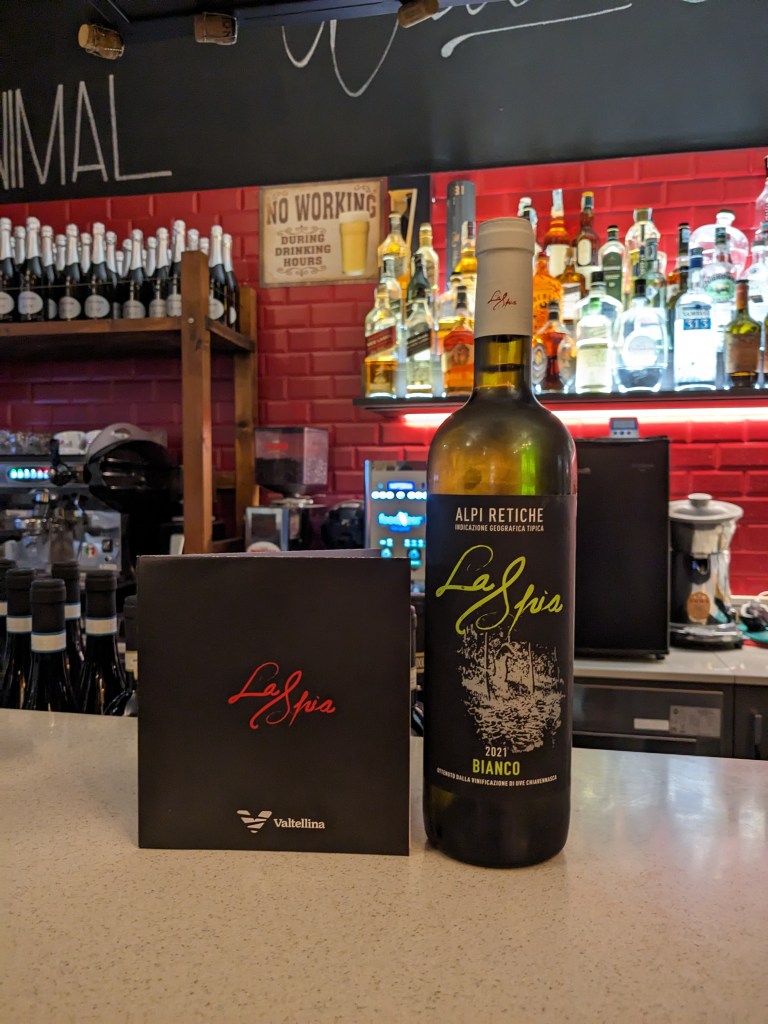
- White Nebbiolo Alpi Retiche Bianco IGT 2021
The evening commenced with the White Nebbiolo Alpi Retiche Bianco IGT 2021, a rare gem that showcased Nebbiolo‘s versatility beyond its traditional red form. Sourced from the Alpine vineyards of the Cantina La Spia in Valtellina, this white Nebbiolo delighted the senses with its pale straw yellow color and delicate aromas of white flowers and subtle minerality. The wine’s structure and complexity hinted at the meticulous winemaking process, underscoring Nebbiolo‘s potential to captivate even in unexpected forms. This white Nebbiolo served as a delightful prelude, setting the stage for the red counterparts that would follow.
- Mario Costa Nebbiolo from Langhe
Next, we explored the more familiar red expression of Nebbiolo with the Mario Costa Langhe Nebbiolo, a testament to the grape’s adaptability to different terroirs. To provide some historical context, Langhe Nebbiolo hails from a region near Alba and was created to utilize younger vines, as Barolos or Barbaresco wines typically require vines to be at least 10 to 15 years old for optimal fruitiness. The wine exhibited pronounced tannins and robust fruit flavors, characteristic of the region known for imparting earthy notes and freshness to its wines.
- Red Nebbiolo from Valtellina: Rainoldi
The tasting culminated with a Red Nebbiolo from Valtellina, sourced from the esteemed Cantina Rainoldi. This wine, originating from terraced vineyards nestled in the Alpine foothills, exhibited a darker, garnet hue indicative of its mountainous origins. The “Inferno” wine truly exemplified the winery’s connection to the land and commitment to environmental stewardship. Drawing upon decades of experience, Rainoldi successfully combines high-quality wine production with environmental responsibility in the region that hosts their vines. Today, Rainoldi stands as one of the most renowned wineries in Valtellina, a testament to its quality and expertise, making its Red Nebbiolo among the most sought-after wines in the region. This Nebbiolo was a genuine representation of Alpine majesty, offering a unique expression of the grape influenced by its distinctive mountainous surroundings.
Matteo Baccalaro
B.Glad, B.You, B.wine!
Check our these links!!
- https://www.laspia.wine/index.php/vini/igt-alpi-retiche-bianco
- https://cantinamariocosta.it/vini/langhe-nebbiolo/
- https://rainoldi.com/vini/inferno-vino/



 B.Wine